

"Sentimental Value" Review
A startlingly realistic portrayal of family and depression

SPOILER FREE
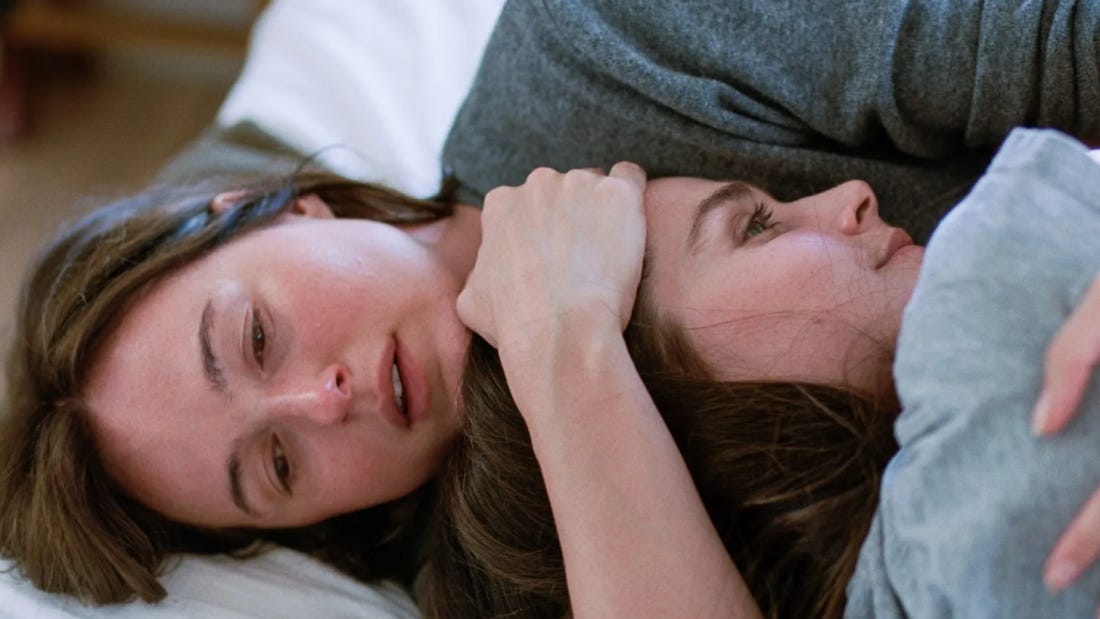
Sentimental Value is the follow-up film to director Joachim Trier’s critically lauded The Worst Person in the World. Through his career, Trier has developed a reputation for bringing sincerity and realistic human emotion to his films. He is not afraid of the vulnerable and sometimes unpleasant nature of the human experience. Sentimental Value brings that sincerity and realism to the forefront once again.
The film follows the sisters, Nora and Agnes, after their mother passes and their father, Gustav, the famed film director, reenters their lives. Gustav is a difficult man and a largely absent father who returns with the hopes that Nora, a successful stage actress, will star in his next movie. This offer and the ensuing drama are the perfect vehicle to explore the complex relationships within this family.
However, drama is a strong word for what ensues in this film. All the characters struggle to express their emotions in different ways, which creates a slow, soft, and quiet affect. Their relationships are as much defined by the inability to communicate as they are by spoken words. This is particularly true of Nora and Gustav, who are too similar for their own good. Nora resents her father, and that resentment impacts every facet of her life. Gustav cannot connect with his daughter and always seems to say the wrong thing. His only way of communicating emotions is through filmmaking. Agnes is often the conduit between the two and tries her best to synthesize their emotions.
Another character in the movie is their home, which has been in Gustav’s family for generations. The characters’ feelings for each other and the family at large are often represented in how they talk about and treat the family home. Nora’s and Agnes’ childhood is also largely told through aspects of the home. The inclusion of the home as a character creates another layer of emotional complexity. Its centrality to the story gives each character a way to express their true feelings without confronting one another.
While this setup may seem distant and potentially hard to connect to, it actually comes across as entirely realistic. Rarely in real life do we have dramatic confrontations with our family members. Often, things go unsaid or bubble below the surface. We don’t usually get the catharsis we feel we deserve, because people are stubborn and don’t like being vulnerable. Instead, the quiet understanding that the characters reach is much truer to life.
Even though I cannot relate to any of the particulars of these characters, I could immediately understand them and empathize with them, despite their many flaws. Family is hard. It’s hard to be similar to your parents. And there’s something in that to which we can all connect.
Another relatable aspect is the way the film depicts depression. For many people, depression is not an intolerable pain but an ever-present apathy that stands in the way, blocking them from feeling. Once again, the film avoids melodramatics and holds space for the complexity that depression can be.
There is no doubt that much of that relatability comes from the film’s fantastic performances. Renate Reinsve returns to Trier as Nora. Her ability to convey so much with so little is startling. While her portrayal is not loud and dramatic, she brings so much complexity to a guarded character. Reinsve somehow makes Nora’s apathy feel dynamic, not static. In different hands, Nora could completely flop. Inga Ibsdotter Lilleaas has some of the most emotionally impactful moments as Agnes and absolutely delivers. She captures Agnes’ pain and frustration without overdoing it. Agnes stays grounded so that her big moments can hit harder. Stellan Skarsgård possibly reaches his career peak as Gustav. Like Nora, Gustav is a guarded character who could be completely unsympathetic in different hands. However, Stellan manages to find his humanity beyond the difficult director facade.
Beyond its performances, the film also looks stunning. Trier has no problem with a long shot, giving his performers the chance to steal the screen. The shots of Nora, in particular, leave the viewer breathless in anticipation. The house is also filmed with meticulous detail. It feels both lived in and distant at different times in the movie. The movie’s color grading also feels incredibly true to life. The right things pop at the right times, and the right things fall into the background. It is nice to see a movie use color in a subtle but effective way (especially after seeing Wicked: For Good).
The soundtrack is another highlight. It features some of Trier’s favorites and kicks in at the perfect times. The music often relays the feelings that the characters cannot. It makes itself known without stealing the show or turning into a music video.
As you may be able to tell, this might be my favorite movie of the year. I still love The Phoenician Scheme, but Sentimental Value hit me to my core. Maybe its because I’m a lot like my father, but I have a feeling it has more to do with the intense sincerity Trier brings to every project. I have no doubt I will think about this movie for years to come.
I recommend Sentimental Value to fans of The Worst Person in the World, daughters with difficult fathers, and those who appreciate sincerity.